


Surgery and Treatment on the Western Front

Our knowledge of medicine and the human body has grown at a truly staggering pace in the last 100 years and one of the most noticeable places to see such evolution was the battlefield. As war provided a constant stream of wounded, new challenges were met with new solutions and the world of medicine was refined into the study we know now.
PLACES TO VISIT

Arras Memorial to the Missing
Situated on the outskirts of Arras, the memorial wall carries the names of 36,000 servicemen with no known grave who died in battles in the Arras sector. The enclosed Faubourg d’Amiens cemetery contains 2,700 graves.
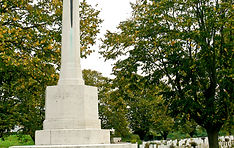
Essex Farm
This cemetery contains the notable graves of 15-year old Pte. Joe Strudwick and Pte. Thomas Barratt V.C. Outside the cemetery is the Albertina Memorial to the poet John McCrae. He is reputed to have written what is perhaps the war’s best known poem, ‘In Flanders Fields’, in a bunker dressing station here.

Hill 60
Although just 60 metres above sea level at the northern end of the Messines Ridge, Hill 60 was a crucial, strategic vantage point from where the Germans could look down on Ypres.

Lijssenthoek CWGC & Medical Visitor Centre
The small Belgian Hamlet of Lijssenthoek was once home to the largest evacuation hospital in The Ypres Salient. Now the site commemorates 10,000 casualties as the second largest war cemetery in Flanders. The visitor centre contains a fascinating insight into the practises that took place as well as just some of the the stories behind the headstones.

Pozieres
The site of the memorial to the dead of the Tank Corps of 1916-1918, and where the first tanks in history saw action.

Serre – Kitchener’s Arm
The 1st of July 1916 saw the first day of The Somme when more than 57,000 British troops lost their lives. In the village of Serre, the 31st Division were mowed down when advancing through the city. Of the 700 that went into the battle, more than 500 were killed in the first 30 minutes of conflict. Many of these men were in “Kitchener’s Army” and enlisted as volunteers to aid in the war effort. Take in the scale of this loss with a 90 minute walk around the battlefields.

The Memorial Museum Passchendaele 1917
This fascinating museum, situated in the grounds of Zonnebeke chateau, gives an overview of the Battle of Ypres, with a focus on Passchendaele 1917, by means of authentic photographic material, historical artefacts and several life-like dioramas.
Visitors can walk through a German trench and descend into a unique 6 metre deep British dugout with communication and dressing posts, headquarters and accommodation. The museum also has reconstructed German and British trench systems.
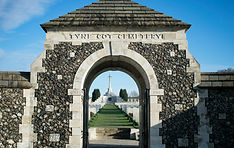
Tyne Cot Cemetery
The world’s largest Commonwealth war cemetery containing the graves of 11,962 men. The rear wall of the cemetery contains the names of almost 35,000 soldiers who have no known grave.
The visitor centre complements your visit to the cemetery.

Brandhoek
Lying just a few miles west of Ieper town, Brandhoek was an area just out of range of enemy fire, making it an ideal spot for a field dressing station and cemetery. The site is the final resting place of Captain Noel Chavasse VC, a British doctor on the front line who continued to tend to wounded in spite of his own injuries.
Gheluvelt 1914
In 1914, this minute village outside Ypres was the scene of one of the most pivotal conflicts in the First World War. The Worcestershire Regiment charged into enemy fire with bayonets in spite of the British Expeditionary Force's withdrawal. Of the 600 that took part in the charge, one third were killed or wounded in the assault, yet their efforts were ultimately successful in holding Allied lines in Flanders.

Langemark German Cemetery
In complete contrast to Tyne Cot, this dark and foreboding place is the only German cemetery in the Salient, with the remains of over 44,000 soldiers including a mass grave of 25,000 men.

Lochnagar Crater
This impressive crater is situated east of the village of La Boiselle. Approximately 90 metres in diameter and 20 metres deep, it was created by a mine detonated on 1st July 1916. This is now a permanent memorial to the soldiers who lost their lives on the first day of the Battle of The Somme.
Serre French Cemetery
The village of Serre regularly fluctuated between British and German control. The fighting was fierce and a huge number of casualties were taken throughout the war in Serre and the surrounding area.

Talbot House, Poperinge
Poperinge remained one of the few unoccupied towns in Flanders and, in 1915, Talbot House was opened as an ‘Everyman’s Club’, where all soldiers were welcomed, regardless of rank.
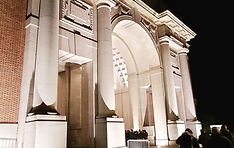
The Menin Gate
The famous British War Memorial, with engraved names of over 54,000 missing British and Commonwealth soldiers who lost their lives on the Ypres Salient.

Ulster Tower
A memorial to the men of the 36th (Ulster) Division. The tower is located very near to the famous Schwaben Redoubt which the Division attacked on 1st July 1916. The front lines were at the edge of Thiepval Wood which lies to the south-west of the road between the Thiepval memorial and the Ulster Tower. Guided tours of nearby trenches are available (advance booking essential).
Itinerary Example
4-Day WWI History & Remembrance: Ypres, The Somme & Arras
Explore the Western Front on an in-depth 4-day tour spanning Flanders and Northern France. Designed for History students, this comprehensive itinerary covers frontline trenches, medical evacuation routes, major battlefield sites, and iconic memorials—giving travellers a profound, personal connection to the Great War.
Day 1: Flanders Crossing, Medical Evacuation & Talbot House (Humanitarian & Social History)
Day 1
Morning: Depart your chosen pickup point by executive coach for a morning ferry or Eurotunnel crossing to Calais or Dunkirk.
Afternoon: Drive into Belgium to explore the Lijssenthoek CWGC Cemetery & Medical Visitor Centre, learning how the wounded were treated behind the front lines. Visit Talbot House in Poperinge—the famous 'Everyman's Club' for soldiers—and pay respects at the war graves at Brandhoek (associated with medical hero Noel Chavasse VC).
Evening: Transfer to your accommodation centre, check-in, unpack, and enjoy a group dinner.
Day 2: The Ypres Salient & Menin Gate Ceremony (Battlefield Tactics & Remembrance)
Day 2
Morning: Depart after breakfast for a full day exploring the Ypres Salient. Key sites can include Hill 60, Gheluvelt, and Essex Farm Cemetery (where 'In Flanders Fields' was written).
Afternoon: Visit the German cemetery at Langemark and explore the interactive exhibits at the Passchendaele Museum 1917 in Zonnebeke.
Evening: Return to Ypres for a group dinner, followed by attending the deeply moving Last Post Ceremony at the Menin Gate (20:00). Return to your accommodation afterward.
Day 3: The Somme Battlefields (Military & Human History)
Day 3
Morning: Check out after breakfast and cross into France to examine the Somme sector. Visit the preserved battlefield at Serre and the historic Ulster Tower at Thiepval.
Afternoon: Stand on the rim of the massive Lochnagar Crater at La Boisselle and pay respects at Pozières Memorial, learning about the tragic scale of the 1916 offensive.
Evening: Check into your French accommodation for a hot group meal and an evening debrief session.
Day 4: Arras Memorial & Homeward Journey (Commemoration & Heritage)
Day 4
Morning: Check out after breakfast and enjoy a final visit to the Arras Memorial to the Missing, honoring the thousands of airmen and soldiers with no known grave.
Afternoon/Evening: Drive to Calais or Dunkirk for your return channel crossing, arriving back at your organisation with unforgettable historical insights.
Note on En-Route Timings: Available visit time on Day 1 and Day 4 depends on your your organisation's departure location and travel distance to the channel ports.
PLACES TO STAY
Novotel
Situated on the outskirts of Arras, the memorial wall carries the names of 36,000 servicemen with no known grave who died in battles in the Arras sector. The enclosed Faubourg d’Amiens cemetery contains 2,700 graves.
Munchenhof Hotel
Situated on the outskirts of Arras, the memorial wall carries the names of 36,000 servicemen with no known grave who died in battles in the Arras sector. The enclosed Faubourg d’Amiens cemetery contains 2,700 graves.
Messines Peace Village
Situated on the outskirts of Arras, the memorial wall carries the names of 36,000 servicemen with no known grave who died in battles in the Arras sector. The enclosed Faubourg d’Amiens cemetery contains 2,700 graves.
CJT De Iep
Situated on the outskirts of Arras, the memorial wall carries the names of 36,000 servicemen with no known grave who died in battles in the Arras sector. The enclosed Faubourg d’Amiens cemetery contains 2,700 graves.
Albion Hotel
Situated on the outskirts of Arras, the memorial wall carries the names of 36,000 servicemen with no known grave who died in battles in the Arras sector. The enclosed Faubourg d’Amiens cemetery contains 2,700 graves.
Ypres Lodge
Situated on the outskirts of Arras, the memorial wall carries the names of 36,000 servicemen with no known grave who died in battles in the Arras sector. The enclosed Faubourg d’Amiens cemetery contains 2,700 graves.
Menin Gate School Hotels
Situated on the outskirts of Arras, the memorial wall carries the names of 36,000 servicemen with no known grave who died in battles in the Arras sector. The enclosed Faubourg d’Amiens cemetery contains 2,700 graves.
New Regina
Situated on the outskirts of Arras, the memorial wall carries the names of 36,000 servicemen with no known grave who died in battles in the Arras sector. The enclosed Faubourg d’Amiens cemetery contains 2,700 graves.
Oude Abdij (Old Abbey)
Situated on the outskirts of Arras, the memorial wall carries the names of 36,000 servicemen with no known grave who died in battles in the Arras sector. The enclosed Faubourg d’Amiens cemetery contains 2,700 graves.
CJT De Lork
Situated on the outskirts of Arras, the memorial wall carries the names of 36,000 servicemen with no known grave who died in battles in the Arras sector. The enclosed Faubourg d’Amiens cemetery contains 2,700 graves.